Dispatch
This Day in Gaming - 1st September 1992: Super Mario Kart

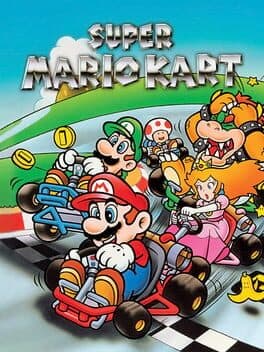
game
Super Mario Kart
Dispatch
game
Super Mario Kart
Keep Reading
 Bombjack
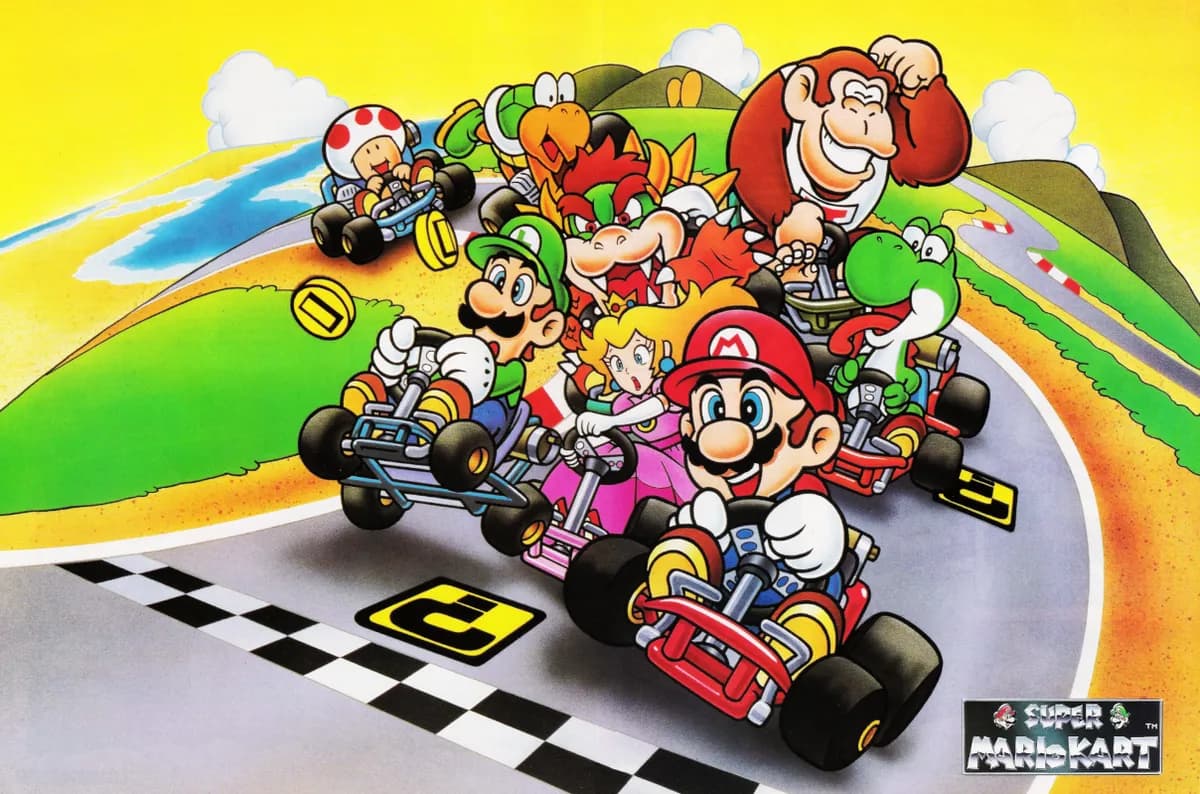
On September 1, 1992, Nintendo released Super Mario Kart on the Super Nintendo Entertainment System in North America, a few days after its Japanese debut on August 27. It would go on to invent an entire genre and launch what is now the best selling racing franchise in gaming.
Super Mario Kart did not begin life as a Mario game at all. Nintendo EAD, the team led by Shigeru Miyamoto, started with a simple technical goal. They wanted a racing game that could show two players on the same screen at once, something the 1990 SNES launch title F-Zero could not do. That single constraint, split-screen for two racers, shaped everything. The tracks had to be simpler and more grounded than F-Zero's high-speed futuristic circuits, and the karts had to be small and readable.
The Mario characters arrived almost by chance. The early prototype used generic drivers, and the team settled on characters roughly three heads tall because that proportion suited the little karts. It was only months into development, after someone tried dropping Mario into a kart and saw how well he fit, that the game became a Mario title. Directed by Tadashi Sugiyama and Hideki Konno, with Masato Kimura as lead programmer and music by Soyo Oka, the project quietly turned into one of the most important games Nintendo would ever make.
The technology doing the heavy lifting was the SNES feature known as Mode 7, which let a flat plane be rotated and scaled to create a convincing pseudo-3D effect. Combined with the DSP-1 co-processor chip, which became the most widely used DSP chip on the system, it gave players the sensation of tearing around a track that stretched and curved away toward the horizon. The lower half of the screen showed your view of the road while the upper half held a rival or an overhead map, a layout that instantly made sense and has barely changed in three decades of sequels.
The roster was eight strong: Mario, Luigi, Princess Peach, Yoshi, Bowser, Donkey Kong Jr., Koopa Troopa, and Toad, each with a distinct balance of top speed, acceleration, and handling. Players raced across twenty tracks split into four cups, at 50cc, 100cc, and 150cc difficulty. The real genius, though, was in the item boxes. Shells to fire at rivals, banana peels to leave behind as traps, and stars for a burst of invincibility turned a straight race into a chaotic scramble where last place was never hopeless and first place was never safe. Power sliding around corners and hopping over hazards added a layer of skill on top. And then there was Battle Mode, the balloon-popping arena duel that became a sleepover staple and remains a fixture of the series today.
The reviews were rapturous. Super Mario Kart holds a 94 percent aggregate on GameRankings, with Computer and Video Games scoring it 96 percent and outlets like Thunderbolt and HonestGamers handing it a perfect ten. IGN would later call it the original karting masterpiece and rank it the 23rd best game ever made in 2007, while GameSpot placed it among the greatest games of all time for its innovation, gameplay, and visual style.
The sales matched the acclaim. The game sold about 8.76 million copies worldwide, including 3.82 million in Japan, making it the fourth best selling SNES game of all time. It topped the charts in Japan on release, led UK sales in February 1993 with more than 250,000 units, and was the top selling game in Europe in the first quarter of 1993.
Its influence is hard to overstate. Super Mario Kart is credited with inventing the kart racing subgenre, and a long line of imitators chased it for years afterward. It was also the first non-platforming game to gather multiple Mario characters into one cast, a template that helped push the wider Mario series to become the best selling franchise in gaming. The honors kept coming decades later, including a 2019 induction into the World Video Game Hall of Fame and a Guinness World Records number one ranking for initial impact and lasting legacy.
Every Mario Kart since, right up to the Switch era, is a refinement of the formula stumbled upon here. Not bad for a game that started out as a two-player experiment with nameless drivers.
No comments yet. Be the first.