Dispatch
Dispatch
Keep Reading
 Bombjack
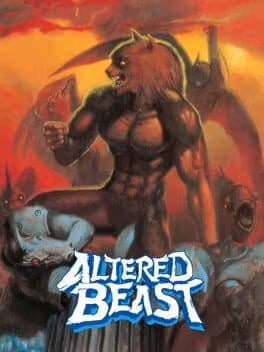
On August 14, 1989, a snarling, muscle-bound Roman centurion clawed his way out of an American living room and helped kick off one of the fiercest rivalries the games industry has ever seen. That was the day Sega's Genesis reached North American shelves, and the cartridge tucked inside the box was Altered Beast. For a whole generation of players, the first words their new 16-bit machine ever spoke were not a title screen jingle but a booming, digitized command: "Rise from your grave."
Altered Beast began life not on the Genesis but in the arcade. Developed by Sega's in-house Team Shinobi and directed by Makoto Uchida, the coin-op original arrived on June 14, 1988. The premise was pure late-80s pulp. Zeus resurrects a fallen centurion and sends him to rescue the goddess Athena from the underworld ruler Neff. Along the way the hero absorbs glowing orbs dropped by white wolves, bulking up until he transforms into a werewolf, a weredragon, a werebear and more. It was a side-scrolling beat-em-up with a gimmick that felt genuinely novel: the power fantasy was not just fighting, but physically changing into a monster mid-level.
The arcade game did well enough that Sega chose it to headline the launch of its new home console. When the Genesis, known as the Mega Drive elsewhere, went on sale in North America, Altered Beast was the pack-in game bundled with every unit at a launch price of 189 dollars. That decision put the game in front of far more people than any arcade cabinet ever could, and it turned a solid coin-op into a defining early memory of the 16-bit era.
It is worth being honest about the calendar here, because the sources do not perfectly agree. Games databases such as GameFAQs and console histories like the Video Game Console Library list the North American release of the Genesis, and therefore Altered Beast, as August 14, 1989. Wikipedia's own account of the console adds nuance, noting that the machine officially launched nationwide in September 1989, with only a handful of units reaching stores in New York and Los Angeles in late August as test markets. In other words, August 14 is the widely cited launch date and the one attached to the game in most databases, while the full national rollout came a few weeks later. Both things are true, and the discrepancy is really about how you define a launch.
Critically, Altered Beast landed to mixed but generally warm reviews. Players and critics praised the chunky, arcade-faithful graphics and the satisfying transformations, while some faulted the thin story and the repetitive structure of its levels. Britain's ACE magazine went so far as to call the Mega Drive conversion the best game available on the system at the time, which says as much about the sparse early library as it does about the game itself.
That last point turned out to matter enormously. Altered Beast was a fine launch title, but it was never going to win a console war. In 1991, Sega of America boss Tom Kalinske made the call that reshaped the company's fortunes: he replaced Altered Beast as the pack-in with a brand new mascot platformer called Sonic the Hedgehog. Sega also reportedly worried that the game's zombies and occult imagery played poorly in more conservative parts of the United States. Swapping a moody werewolf brawler for a bright, fast, family-friendly hedgehog helped Sega finally gain real ground on Nintendo, and it retired Altered Beast from its place at the front of the box.
For a game that was quietly benched after two years, Altered Beast has proven remarkably hard to forget. That opening line, "Rise from your grave," became one of gaming's most quoted pieces of tinny digitized speech, instantly recognizable even to people who never finished the first level. The franchise resurfaced with a Game Boy Advance sequel in 2002 and a darker PlayStation 2 reboot in 2005, and the original has been re-released countless times across Sega compilations and modern download services. The centurion even shuffled onto the big screen, appearing among the retro villains in Disney's Wreck-It Ralph in 2012.
More than three decades on, Altered Beast endures less as a great game and more as a great artifact. It is the sound a Genesis made when it first switched on, the strange and slightly goofy monster movie that introduced millions of players to Sega's challenge against Nintendo. Every console war needs an opening shot, and on August 14, 1989, this one rose from its grave.
August 14 has one other notable release worth a mention. In 2012, Square Enix launched the open-world Hong Kong crime drama Sleeping Dogs in North America, a cult favorite that found a devoted audience despite a troubled development history under United Front Games.
Sources
No comments yet. Be the first.