Dispatch
Dispatch
Keep Reading

 Bombjack
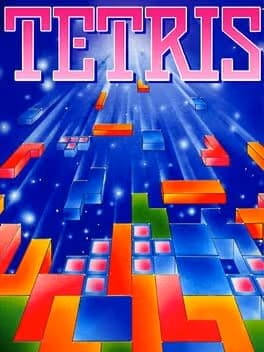
On July 31, 1989, Nintendo launched the Game Boy in North America, and tucked inside the box was a game that would go on to outshine the hardware it was selling. That game was Tetris. It is hard to think of a cleaner example of the right game meeting the right machine at the right moment. The Game Boy gave Tetris a home in millions of pockets, and Tetris gave the Game Boy a reason to be there.
Tetris did not begin as a commercial product at all. It was created in 1984 by Alexey Pajitnov, a researcher at the Dorodnitsyn Computing Centre of the Soviet Academy of Sciences in Moscow. Fascinated by puzzles, Pajitnov built a game around falling geometric shapes, the seven tetrominoes, that players rotated and slotted together to clear lines. It spread from computer to computer across the Soviet Union and then leaked westward, and what followed was one of the most tangled licensing sagas in the industry's history. Rights to the game were claimed, sub-licensed, and contested across several companies and countries, and the confusion eventually pulled in Nintendo, Atari's Tengen label, and the Dutch-born entrepreneur Henk Rogers.
Rogers, who ran Bullet-Proof Software, encountered Tetris and became convinced it belonged on Nintendo's new handheld. The now famous pitch he made to Nintendo of America was blunt and correct. Nintendo had considered bundling Super Mario Land with the Game Boy, but Rogers argued that Mario would sell the machine to children, while Tetris would sell it to everyone. He reportedly told Nintendo that if they wanted the whole world to buy the console, they should include Tetris. Nintendo listened.
When the Game Boy reached North American shelves on July 31, 1989, Tetris came packed in with it. The pairing worked because the two suited each other so well. The Game Boy's small monochrome screen and modest battery life were not obstacles for Tetris the way they might have been for a sprawling action game. Tetris asked only for quick reflexes and a spare few minutes, and it rewarded players endlessly because it never really ended. The falling blocks simply sped up until you lost, which meant the game was as good for a two-minute wait as for a two-hour session.
There was also the sound. The Game Boy version's Type A music, an arrangement of the Russian folk tune "Korobeiniki," became one of the most recognizable pieces of music in games, its jaunty melody permanently fused in the memory of anyone who owned the handheld. Add the Game Link Cable, which let two players compete head to head, and Tetris quietly became one of the first great portable multiplayer experiences.
The commercial result was staggering. Because it shipped with the console, Tetris reached an enormous audience almost immediately, and it kept selling on its own merits long after. Counting the bundled copies, the Game Boy version moved on the order of 35 million units, making it one of the best-selling video games of its era and cementing its reputation as the Game Boy's killer app. It topped sales charts in both Japan and the United States and pulled the handheld along with it.
It is worth being precise here, because the story spans several regions. The Game Boy and its Tetris cartridge first appeared in Japan, where the game launched on June 14, 1989, roughly two months after the console itself. The North American release, the one bundled with the handheld, is the July 31, 1989 date featured here. Europe waited longer, receiving its Game Boy Tetris on September 28, 1990. These regional dates are consistent across the sources checked below.
More than three and a half decades later, Tetris is arguably the most portable idea in gaming, a design so pure it works on any screen with any control scheme. It has been ported, remade, and reinvented on virtually every platform since, from the NES to smartphones to the competitive frenzy of modern battle royale versions. Yet for a huge number of players, the definitive Tetris is still the little grey cartridge that came free with a grey plastic brick in the summer of 1989. Alexey Pajitnov himself has said the Game Boy edition is his favourite version of the game he invented.
That is the quiet magic of July 31, 1989. Nintendo set out to sell a handheld console, and in doing so it handed the world a game that people are still playing today.
Also released on July 31 in other years: the remastered collections of Ys VIII: Lacrimosa of Dana and Ys IX: Monstrum Nox arrived on July 31, 2025, alongside a busy day of indie launches.
No comments yet. Be the first.