Dispatch
This Day In Gaming, August 16: Minecraft: Pocket Edition

game
Minecraft
Dispatch
game
Minecraft
Keep Reading
 Bombjack
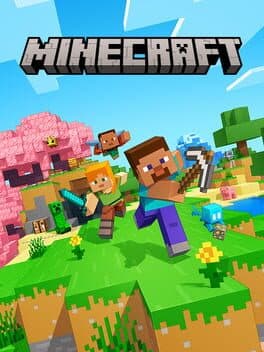
On August 16, 2011, one of the most consequential games of the decade arrived not with a blockbuster launch event but as a quiet download on a single, slightly awkward smartphone. That was the day Mojang released the first public version of Minecraft: Pocket Edition, and it was available on exactly one device: Sony Ericsson's Xperia Play, the "PlayStation phone" with a slide-out gamepad. Version 0.1.0 alpha cost around $6.99 in the United States and £4.26 in the United Kingdom through the Android Market, and it was announced during GamesCom 2011 in Cologne. Few people watching at the time could have guessed they were seeing the first mobile steps of what would become the best-selling video game ever made.
To understand why a rough phone port mattered, you have to rewind to the game it came from. Minecraft began as the solo project of Swedish developer Markus "Notch" Persson, whose playable alpha appeared on PC in 2009. Its premise was almost defiantly simple. You are dropped into a blocky, procedurally generated world, and you dig, gather, build, and survive. There was no story to speak of, no tutorial, and no obvious goal beyond the ones players invented for themselves. That open-endedness turned out to be the point. Word spread through forums and YouTube long before the PC version left beta, and Persson's tiny studio, Mojang, suddenly found itself steering a cultural juggernaut.
By 2011 the demand to play Minecraft everywhere, including in a pocket, was obvious. The Xperia Play made a natural launch partner because Sony Ericsson was eager to prove the handset could be a genuine gaming device, and a timed exclusive with a hot indie title was exactly the kind of headline it wanted.
The debut build was modest by design. According to Mojang's own version history, Pocket Edition 0.1.0 alpha offered randomized worlds, the core loop of placing and destroying blocks, and local multiplayer over a wireless network so friends nearby could build together. It included a handful of biomes and terrain features such as mountains, oceans, and floating islands, and a limited palette of blocks. The controls were adapted for touchscreens, with a simplified interface that stripped the experience down to its essentials.
It was, in other words, a long way from the sprawling PC game. There was no survival mode with monsters at first, and the feature list looked thin next to its desktop parent. But the fundamental magic, the freedom to reshape a world block by block, was intact, and that was enough to hook the same audience that had made the original a sensation.
The initial reaction was a mix of genuine excitement and impatience. Fans were thrilled that Minecraft was finally portable, while reviewers noted how much was missing compared to the PC edition. Crucially, Mojang framed the mobile version as a live service that would grow over time, promising a steady stream of updates rather than a finished product. That promise held. The Xperia Play exclusivity did not last long, and Pocket Edition rolled out more widely to other Android devices in October 2011, followed by an iOS version later that year. From there it received update after update, gradually closing the gap with its bigger siblings and eventually adding survival gameplay, crafting, and much more.
Over the following years, Pocket Edition became the foundation of what Mojang later unified under the Bedrock Edition banner, the cross-platform version of Minecraft that runs on phones, tablets, consoles, and Windows. Mobile play stopped being a novelty and became one of the primary ways millions of people experience the game.
The scale of what started on that August day is hard to overstate. In September 2014, Microsoft acquired Mojang for about 2.5 billion dollars, a deal driven largely by Minecraft's staggering reach. By October 2023, Microsoft confirmed that Minecraft had sold more than 300 million copies across all platforms, making it the best-selling video game of all time by a wide margin, a status recognized by outlets from the BBC to Guinness World Records. A meaningful share of those players came through the mobile door that Pocket Edition opened in 2011.
It is a fitting story for a game about humble beginnings and endless building. Minecraft: Pocket Edition launched small, on one phone, with a short feature list and a modest price. What it started reshaped mobile gaming and helped cement Minecraft as a permanent fixture of pop culture.
August 16 has other entries in the release calendar worth a nod. In 2005 it saw the launch of the action role-playing sequel Dungeon Siege II from Gas Powered Games, the stylish cult beat-em-up Darkwatch, and Sonic Gems Collection. The same 2011 date that gave us Pocket Edition also delivered the striking Japanese action game El Shaddai: Ascension of the Metatron, and a decade later, in 2021, the narrative road-trip game Road 96 arrived. But for sheer long-term impact, the little block game that showed up on a niche gaming phone is tough to beat.
Sources
No comments yet. Be the first.