Illusion City
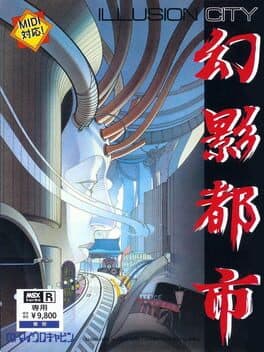
Illusion City is a Japanese-style role-playing game with several distinguishing characteristics. Unlike most games of the genre, it has no overworld, and takes place entirely in a vast city divided into several districts. The player advances the story by exploring the city, talking to non-playable characters, gathering information, receiving missions, and eventually heading into large, complex hostile areas. There are no random battles in the game; all enemies are visibly moving on the field, and many of them can be avoided. Combat is turn-based, utilizing an "over-the-shoulder" perspective similar to that of Phantasy Star II. Characters join the party as dictated by the plot; an active party includes three combatants. A wide variety of weapon and armor types can be purchased or found in dungeons. Each character has his or her own weapon proficiencies, which can be increased by repeatedly using the same weapon type. Firearms require specific ammunition (e.g. bullets, shotgun cartridges, etc.), which is expended in combat and must be re-stocked. In addition, certain characters can use offensive, supportive, and healing techniques. The game's visual style aims for realistic presentation of locations and characters, and shares more common traits with contemporary Western visual aesthetics than the traditional Japanese anime art.
Overview
Summary
Illusion City is a Japanese-style role-playing game with several distinguishing characteristics. Unlike most games of the genre, it has no overworld, and takes place entirely in a vast city divided into several districts. The player advances the story by exploring the city, talking to non-playable characters, gathering information, receiving missions, and eventually heading into large, complex hostile areas. There are no random battles in the game; all enemies are visibly moving on the field, and many of them can be avoided. Combat is turn-based, utilizing an "over-the-shoulder" perspective similar to that of Phantasy Star II. Characters join the party as dictated by the plot; an active party includes three combatants. A wide variety of weapon and armor types can be purchased or found in dungeons. Each character has his or her own weapon proficiencies, which can be increased by repeatedly using the same weapon type. Firearms require specific ammunition (e.g. bullets, shotgun cartridges, etc.), which is expended in combat and must be re-stocked. In addition, certain characters can use offensive, supportive, and healing techniques. The game's visual style aims for realistic presentation of locations and characters, and shares more common traits with contemporary Western visual aesthetics than the traditional Japanese anime art.
Explore